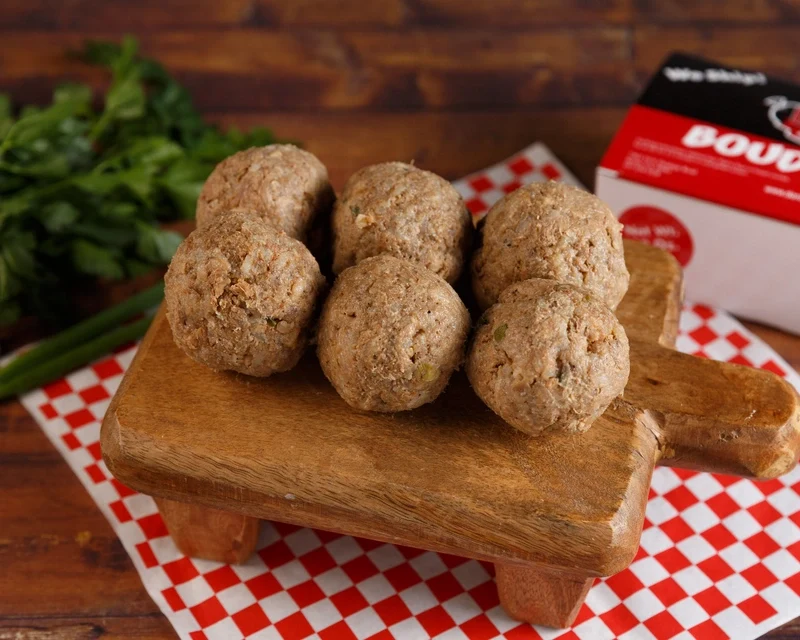
Boudin balls are made from traditional Cajun boudin filling, typically a seasoned mixture of cooked pork, rice, vegetables, herbs, and spices. Instead of being stuffed into a sausage casing like boudin links, the filling is shaped into balls, breaded, and fried until the outside is crisp and the inside remains soft and savory.
Both boudin balls and boudin links start with the flavors people associate with Louisiana boudin, but their textures, preparation and serving styles are very different.
If you want a traditional Cajun experience, boudin links are the classic choice. If you want something crispy, easy to share, and perfect for appetizers or parties, boudin balls are a great option.
Boudin Balls vs Boudin Links at a Glance
| Feature | Boudin Balls | Boudin Links |
| Form | Round balls | Sausage-shaped links |
| Casing | No | Yes |
| Exterior | Breaded and fried | Sausage casing |
| Inside | Seasoned boudin filling | Seasoned boudin filling |
| Texture | Crispy outside, soft inside | Soft, moist filling |
| Common use | Appetizers, parties, snacks | Meals, snacks, traditional serving |
| How they are served | Usually hot with dipping sauces | Warm, whole or with filling removed from casing |
What Are Boudin Balls?
Boudin balls are a popular Louisiana variation of traditional boudin.
Instead of putting the boudin filling into a casing, the filling is formed into individual balls, coated with breading, and fried until golden. The result is a crispy exterior surrounding a soft, richly seasoned center.
That contrast in texture is a big part of their appeal.
Boudin balls are commonly served as:
- Appetizers
- Party food
- Tailgate snacks
- Game-day food
- Part of a Cajun platter
- A quick snack with dipping sauce
Because there is no casing, they are also an easy introduction to boudin for people trying it for the first time.
What Are Boudin Balls Made From?
Traditional boudin balls begin with the same type of filling commonly used in boudin links.
That filling typically includes:
- Cooked pork
- Rice
- Onion
- Green onion or parsley
- Peppers
- Cajun seasoning
- Herbs and spices
The exact recipe varies between Cajun meat markets and families.
Once the filling is prepared, it is shaped into balls, breaded, and fried. Some variations also include additional ingredients such as cheese or seafood.
Don’s offers different styles of boudin products, including original boudin balls and specialty varieties such as pepper jack boudin balls or seafood boudin balls with pepper jack cheese.
If you are new to boudin itself, read our guide to what boudin is in Louisiana.
What Is a Boudin Link?
A boudin link is the traditional sausage-shaped form of Cajun boudin.
The seasoned meat-and-rice filling is placed inside a casing, creating a link that resembles sausage. Boudin differs from many conventional sausages because cooked rice is an important part of the filling.
Boudin links are usually served warm and can be eaten several ways.
Some people eat the entire link, casing included. Others split the casing and eat the filling on its own or spoon it onto crackers.
Boudin links are popular for:
- Quick snacks
- Breakfast
- Lunch or dinner
- Tailgates
- Cajun food spreads
- Keeping in the freezer for easy meals
What’s the Difference Between Boudin Balls and Boudin Links?
The biggest difference is how the boudin filling is prepared and served.
A boudin link is a sausage casing filled with boudin filling.
A boudin ball removes the casing completely, forms the filling into a ball, adds breading, and fries it.
That one change creates noticeable differences in texture, flavor, and the way each is eaten.
1. Texture
Boudin links are generally soft and moist inside, with a casing surrounding the filling.
Depending on how they are heated, the casing may remain soft or become slightly firmer or crisp.
Boudin balls have more contrast.
The breading creates a crispy exterior, while the filling remains soft inside.
If you prefer crispy fried appetizers, boudin balls may appeal to you more. If you want the traditional texture of Louisiana boudin, links are the place to start.
2. Flavor
The core flavors are similar because both are based on seasoned boudin filling.
Traditional boudin brings together savory meat, rice, vegetables, herbs, and Cajun spices.
Boudin balls add the flavor and texture of the fried breading. Specialty versions may also include ingredients such as pepper jack cheese or seafood.
3. Casing
Boudin links have a casing.
Boudin balls do not.
For some first-time boudin eaters, that makes boudin balls feel more familiar because they can simply pick one up and eat it like another fried appetizer.
How Do You Eat Boudin Balls?
Boudin balls are normally served hot and can be eaten on their own or with dipping sauces.
Popular accompaniments include:
- Remoulade
- Creole mustard
- Hot sauce
- Ranch
- Pepper jelly
- Spicy mayonnaise
They can also be served alongside cracklins, smoked sausage, pickles, boudin pistolettes, and other Cajun foods.
Because they are individually portioned, boudin balls work especially well on appetizer trays and party spreads.
How Do You Eat Boudin Links?
Boudin links can be enjoyed several ways.
You can:
- Eat the warm link directly
- Eat the casing along with the filling
- Split the casing and eat the filling
- Squeeze the filling onto crackers
- Serve the link alongside traditional Cajun sides
People commonly pair boudin with crackers, mustard, hot sauce, pickles, potato salad, and other simple sides.
For more ideas, see our guide to what to serve with boudin.
Which Is Better for First-Time Boudin Eaters?
Boudin balls can be an easy starting point for someone who has never eaten boudin.
They are crispy, bite-sized and have no casing. Their format is similar to other fried appetizers, so they may feel more familiar.
That lets you compare traditional boudin links with the crispy fried version and decide which style you prefer.
But if someone wants to understand traditional Louisiana boudin, a classic pork boudin 4-link pack is still the best introduction.
A good first order is to try both. Our boudin sampler pack lets you compare traditional boudin links with crispy fried options so you can decide which style you prefer.
Which Is Better for Parties?
Boudin balls are usually the easier option for parties.
Guests can pick them up individually, add a dipping sauce, and continue eating without utensils or much preparation.
They work especially well for:
- Tailgates
- Office parties
- Holiday gatherings
- Family events
- Game-day spreads
- Appetizer tables
Boudin links can also work for groups, particularly when preparing party links as part of a larger Cajun meat spread. You can also mix up the spread with finger foods like boudin tots or crispy boudin pepper jack cheese egg rolls.
Which Is Better for a Meal?
Boudin links generally work better as the main part of a meal because they pair easily with side dishes. For family dinners, stocking up on a 5lb pork boudin box provides plenty of links for hearty plates.
Try serving boudin links with:
- Potato salad
- Coleslaw
- Pickles
- Crackers
- Red beans and rice
- Eggs
- Grilled vegetables
- Gumbo or other Cajun dishes
Boudin balls can certainly be part of a meal, but they are especially well suited to appetizers and snacks.
How to Heat Boudin Links
Boudin links are usually reheated rather than cooked from raw, but always follow the instructions for the specific product you purchased.
Common methods include:
- Oven: Heating boudin in the oven works well when preparing several links at once.
- Grill: Indirect heat can warm the filling while adding a little smoky flavor to the casing.
- Air Fryer: An air fryer can help create a slightly firmer exterior while heating the filling.
- Steaming: Steaming works well when you want to preserve a softer casing.
- Microwave: For a quick option, boudin can be reheated in short intervals in the microwave. Covering it with a damp paper towel can help prevent it from drying out.
Avoid excessive heat because the casing may split and the filling may become dry.
For more preparation options, see our guide on how to cook boudin.
How to Heat Boudin Balls
Boudin balls are best when the outside is crisp and the center is thoroughly heated.
The exact instructions depend on whether the product is fresh, refrigerated, or frozen, so follow the packaging directions first.
Common reheating methods include:
- Oven
- Air fryer
- Deep fryer
- Toaster oven
Microwaving may warm the center, but it generally does not preserve the crispy exterior as well as dry-heat methods.
Can You Freeze Boudin Balls and Boudin Links?
Boudin links and many boudin-ball products can be stored for later use, but storage and freezing instructions can vary by product.
Always check the package or product page for:
- Refrigeration instructions
- Freezing recommendations
- Use-by information
- Thawing instructions
- Reheating directions
If you order boudin online, follow the instructions provided when the shipment arrives.
For more detailed guidance, read our guide on how to store, freeze, and reheat boudin.
What Should You Serve With Boudin Balls and Boudin Links?
Both styles pair well with other Louisiana favorites.
Popular options include:
- Cracklins
- Smoked sausage
- Pickles
- Potato salad
- Coleslaw
- Crackers
- Mustard
- Hot sauce
- Pepper jelly
- Remoulade
For a larger Cajun spread, combine boudin links, boudin balls, cracklins, sausage, and several dipping sauces or sides.
You can find more ideas in our complete guide to what to serve with boudin.
Can You Order Boudin Balls Online?
Yes. Don’s Specialty Meats offers selected boudin products for nationwide delivery when you want to buy boudin online, including traditional links and boudin-ball varieties.
Availability may vary, so check each product page for current:
- Package sizes
- Pricing
- Shipping eligibility
- Storage requirements
- Heating instructions
If you want to compare the different options, browse Don’s boudin selection before choosing what to order.
Should You Choose Boudin Balls or Boudin Links?
Choose boudin links if you want:
- The traditional Louisiana boudin experience
- A soft, savory texture
- Something suitable for a meal or snack
- Different reheating options
- Boudin that can easily be paired with sides
Choose boudin balls if you want:
- A crispy appetizer
- Something easy to serve at parties
- A casing-free way to try boudin
- A shareable snack
- Something that works well with dipping sauces
Or choose both.
Boudin links represent the traditional way Louisiana boudin is served, while boudin balls show how the same filling can be transformed into a crispy, crowd-friendly appetizer.
Try Boudin Balls and Boudin Links From Don’s Specialty Meats
Don’s Specialty Meats serves boudin, cracklins, specialty meats, prepared foods, seasonings, and other South Louisiana favorites from its locations in Scott and Carencro.
If you are trying boudin for the first time, consider starting with classic pork boudin and adding original boudin balls so you can experience both styles.
Already a boudin fan? Explore different varieties, including smoked boudin, smoked boudin with pepper cheese, seafood options, and specialty boudin balls.
You can visit Don’s in Louisiana or shop selected Cajun favorites online.
Frequently Asked Questions
What are boudin balls?
Boudin balls are made from seasoned boudin filling, formed into balls, breaded and fried until the outside is crispy and the inside remains soft.
What are boudin balls made from?
Traditional boudin balls are usually made from a mixture of cooked pork, rice, vegetables, herbs, and Cajun seasonings. The filling is then shaped, breaded, and fried.
What is the difference between boudin balls and boudin links?
Boudin links are made by placing the filling inside a sausage casing. Boudin balls use the filling without a casing, shape it into balls, bread it, and fry it.
Are boudin balls made from boudin?
Yes. Boudin balls are typically made with the same seasoned meat-and-rice filling as boudin links.
Do boudin balls have a casing?
No. Boudin balls do not use sausage casing. The filling is shaped into balls and covered with breading instead.
Are boudin balls spicy?
The spice level depends on the recipe. Some are relatively mild, while varieties made with hotter seasonings or pepper jack cheese may be spicier.
Are boudin links already cooked?
Many boudin links sold by Cajun meat markets are already cooked and only require reheating. Always check the product packaging or seller’s instructions for the specific item.
What is better for a party, boudin balls or boudin links?
Boudin balls are particularly convenient for parties because they are individually portioned, easy to serve, and work well with dipping sauces.
What is better for a meal, boudin balls or boudin links?
Boudin links usually work better as the main part of a meal because they pair easily with sides such as potato salad, coleslaw, crackers, eggs, and vegetables.
Can you order boudin balls online?
Don’s offers selected boudin-ball and boudin-link products online. Check the individual product pages for current availability, shipping information, package sizes, and storage instructions.